

Why should the thyroid be monitored during pregnancy?
Thyroid hormone affects the mother's metabolism, heart rate, and body temperature. It also affects fetal growth and brain development. In early pregnancy, human chorionic gonadotropin made by the placenta may temporarily lower thyroid-stimulating hormone, and thyroid hormone may also be temporarily higher. This is more common in people with severe morning sickness. In most cases, this is a normal pregnancy-related change. Your doctor will decide whether follow-up or treatment is needed based on your symptoms and blood test results.
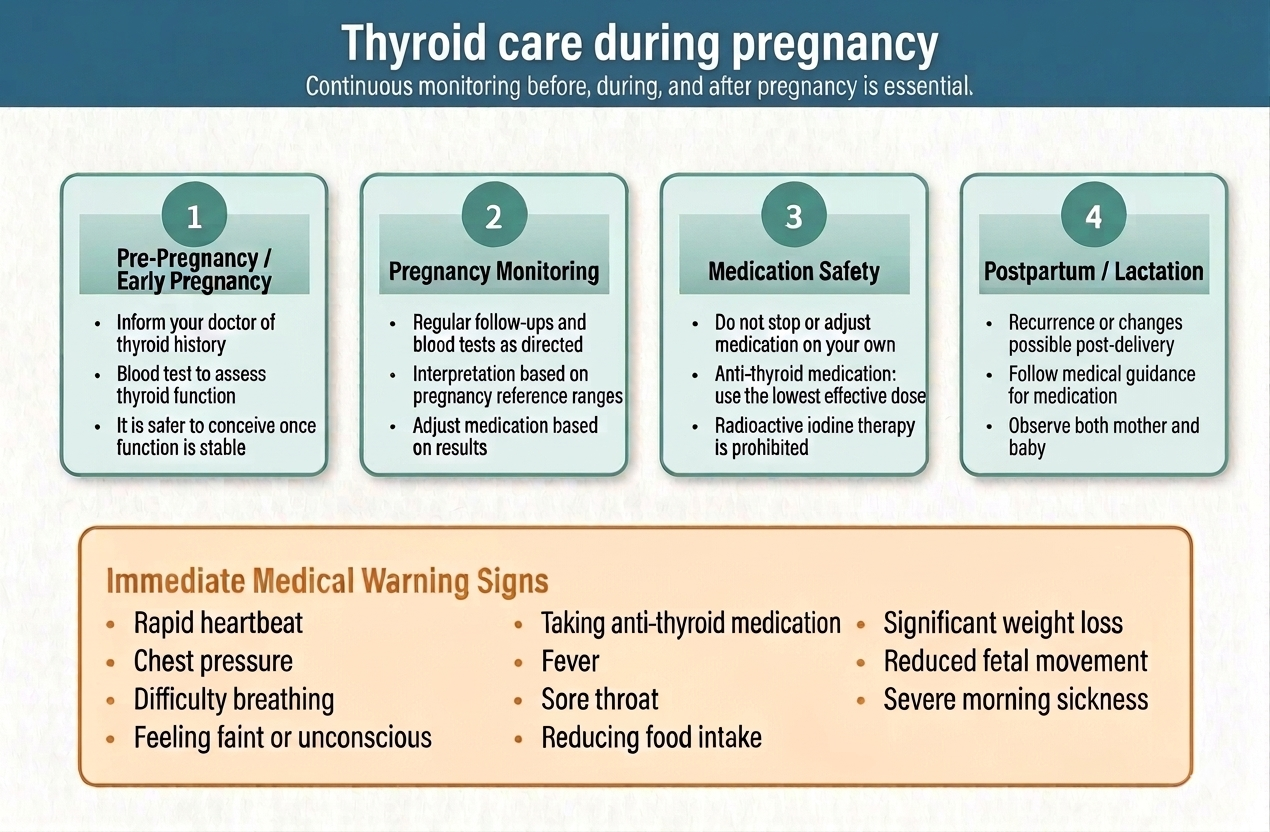
If you had thyroid dysfunction, an enlarged thyroid, thyroid nodules, thyroid surgery, radioactive iodine treatment, type 1 diabetes, another autoimmune disease, or a family history of thyroid disease before pregnancy, please tell your doctor when preparing for pregnancy or early in pregnancy. If you are planning pregnancy, it is best to have stable thyroid function before becoming pregnant.
What symptoms or conditions should I tell my doctor about?
Common symptoms of hyperthyroidism include palpitations, shaky hands, feeling hot, excessive sweating, not gaining weight or losing weight, anxiety, poor sleep, an enlarged thyroid, or protruding eyes. Common symptoms of hypothyroidism include feeling cold, fatigue, constipation, dry skin, sleepiness, a slow heartbeat, too much weight gain, or swelling.
These symptoms may overlap with common discomforts of pregnancy. Your doctor can arrange blood tests to help determine the cause. Please do not buy thyroid medicines or iodine-containing supplements on your own, and do not stop or adjust your medicine by yourself.
What should I know about hypothyroidism during pregnancy?
If hypothyroidism is not well controlled, it may increase the risk of miscarriage, preterm birth, pregnancy-related high blood pressure, anemia, and fetal growth problems. It may also affect fetal brain development.
The main treatment is thyroid hormone replacement. This medicine is commonly used during pregnancy and can be used safely under a doctor's instructions. During pregnancy, the body often needs more thyroid hormone. If you were already taking thyroid hormone replacement, please return to clinic as soon as you have a positive pregnancy test or when you are preparing for pregnancy, so your doctor can assess whether the dose needs adjustment.
Thyroid hormone replacement should be taken at a fixed time. It should be separated from iron, calcium, prenatal vitamins, or stomach medicines by at least 4 hours, because these products may affect absorption.
Can I take thyroid medicine after delivery or while breastfeeding?
After delivery, changes in the immune system may cause Graves' disease to recur or worsen. Postpartum thyroiditis may also occur. After delivery, if you have palpitations, feel hot, have shaky hands, or lose weight quickly, or if you have long-lasting fatigue, feel cold, have constipation, or feel depressed, please return to clinic for a thyroid function check.
During breastfeeding, most thyroid medicines can be used under a doctor's instructions. These include thyroid hormone replacement and low-to-moderate doses of antithyroid medicines. Please take medicines and follow up as instructed, and tell the pediatrician about your thyroid history and current medicines.
How should I take care of myself? When should I seek medical care right away?
- Take medicines regularly and return for blood tests as instructed. Do not stop or adjust medicines on your own, and do not buy iodine-containing supplements by yourself.
- At each prenatal visit, actively tell your obstetrician and endocrinologist about your current medicines and test results.
- If you have positive thyroid antibodies, had radioactive iodine treatment or thyroid surgery, or used antithyroid medicines during pregnancy, please tell the pediatrician so your baby can be assessed after birth.
- Seek medical care right away if you have a very fast heartbeat, chest tightness, shortness of breath, near fainting, confusion, severe vomiting and cannot eat, or clearly decreased fetal movement.
- If you develop fever, sore throat, jaundice, or dark urine after taking antithyroid medicines, please seek medical care right away.
 開關
開關
 首頁
首頁
 Facebook
 Instagram
 體系醫院
體系醫院
 中國醫點通
中國醫點通