
 Switch
 Homepage
 facebook
 IG
 Other Hospital
 CMUH App
Neurology | Our Speciality
Our Speciality
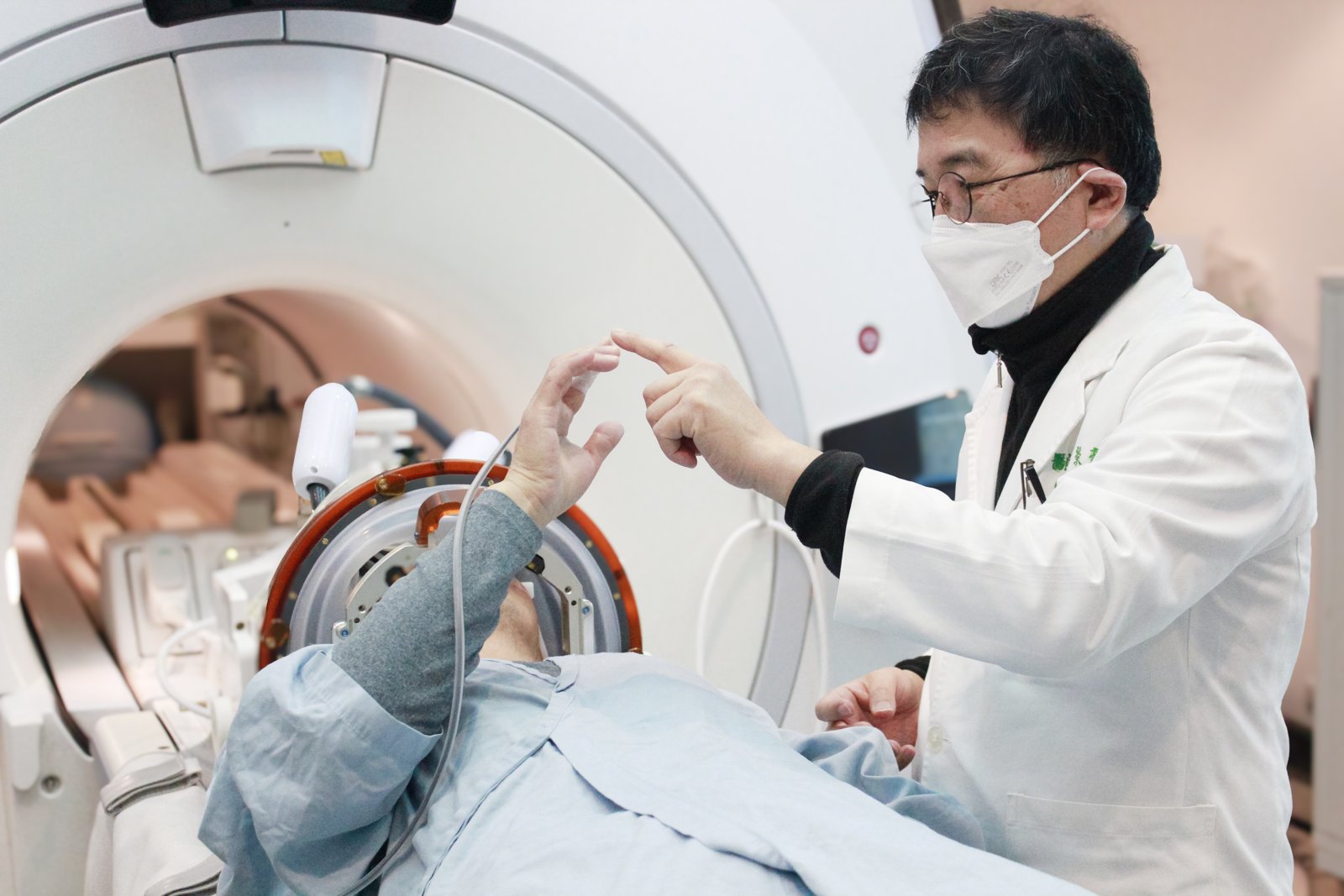
Precision Treatment of Parkinson Disease with MR-guided Focused Ultrasound and Innovative Translational Research on Targeted Exosomes, PAA Peptide, and Neural-Targeted Mitochondrial Transplantation
00 Core Expertise
We integrate AI-assisted assessment, digital twin modeling, and neuroimaging to support precision diagnosis and personalized treatment of Parkinson disease, including MRI-guided focused ultrasound (MRgFUS), while connecting multidisciplinary care with translational research into disease mechanisms and novel therapies.
00 Key Features
1. Integrated care
Our center brings together specialists in neurology, neurosurgery, neuroradiology, rehabilitation medicine, nuclear medicine, artificial intelligence, and genetics. Treatment planning considers disease stage, functional priorities, cognitive status, and comorbidities, with rehabilitation and other supportive services tailored to each patient’s needs.
Our distinctive stepwise dual-target approach
MRI-guided focused ultrasound (MRgFUS) delivers focused ultrasound energy through the intact skull to create a precisely targeted thermal lesion without a cranial incision or implanted stimulation hardware. Treatment is generally performed while the patient is awake, with MRI guidance, real-time temperature monitoring, and repeated neurological examinations to assess symptom response and potential adverse effects.
Our team’s distinctive stepwise approach targets cardinal features including tremor, rigidity and bradykinesia [1–3].
2. Collaboration with exosome and mitochondrial research teams to advance the following areas
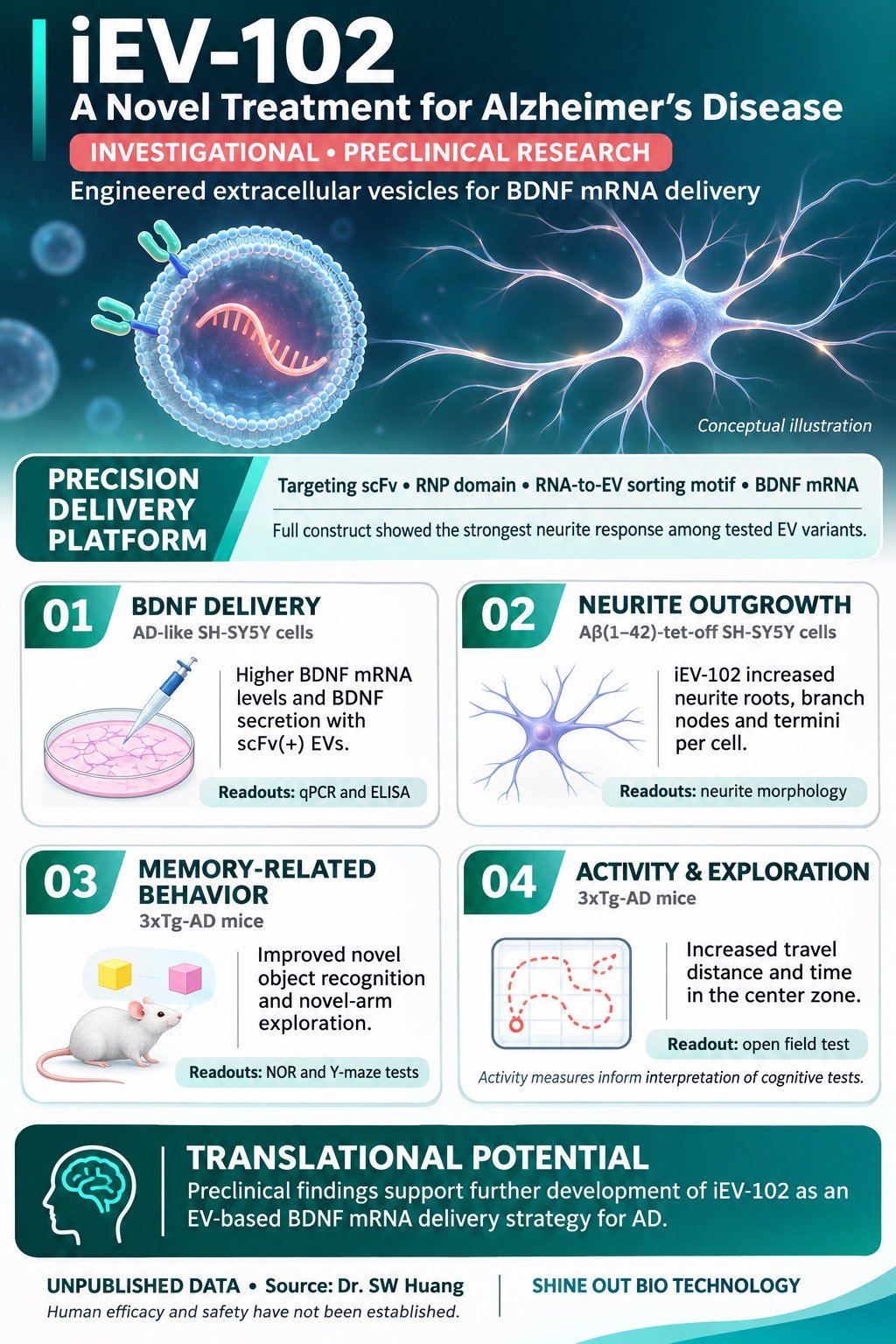
(1) Innovative applications of specifically targeted exosomes in Alzheimer’s disease
We investigate specifically targeted exosomes as an innovative research approach, exploring their potential for precision delivery and neuroprotection to advance the development and translation of emerging therapeutic strategies for Alzheimer’s disease.
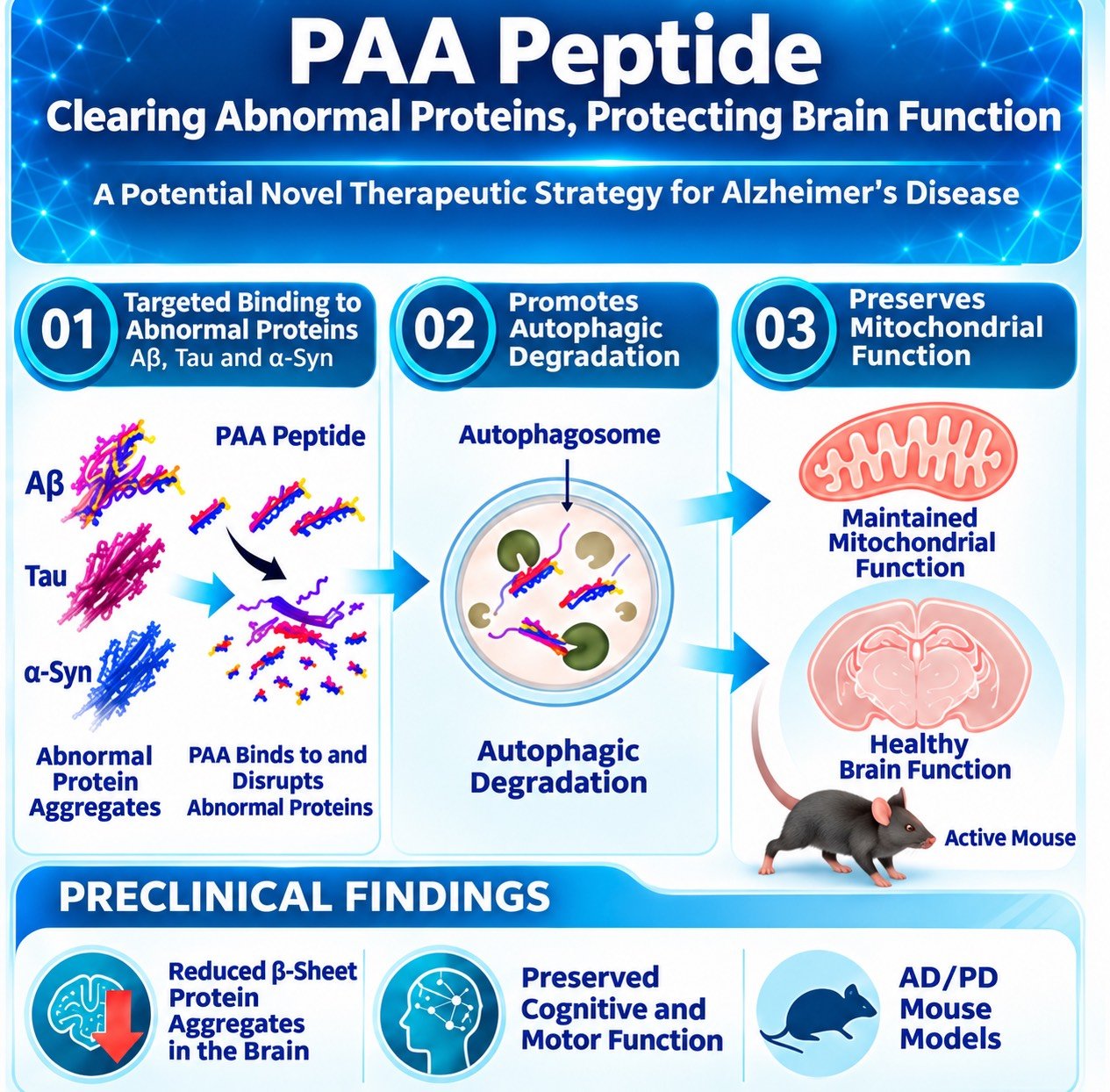
(2) Research on PAA peptide as an innovative therapeutic approach for Alzheimer’s disease
We explore the therapeutic potential of PAA peptide in Alzheimer’s disease. Through mechanistic studies and efficacy evaluation, we assess its feasibility as a novel therapeutic strategy.
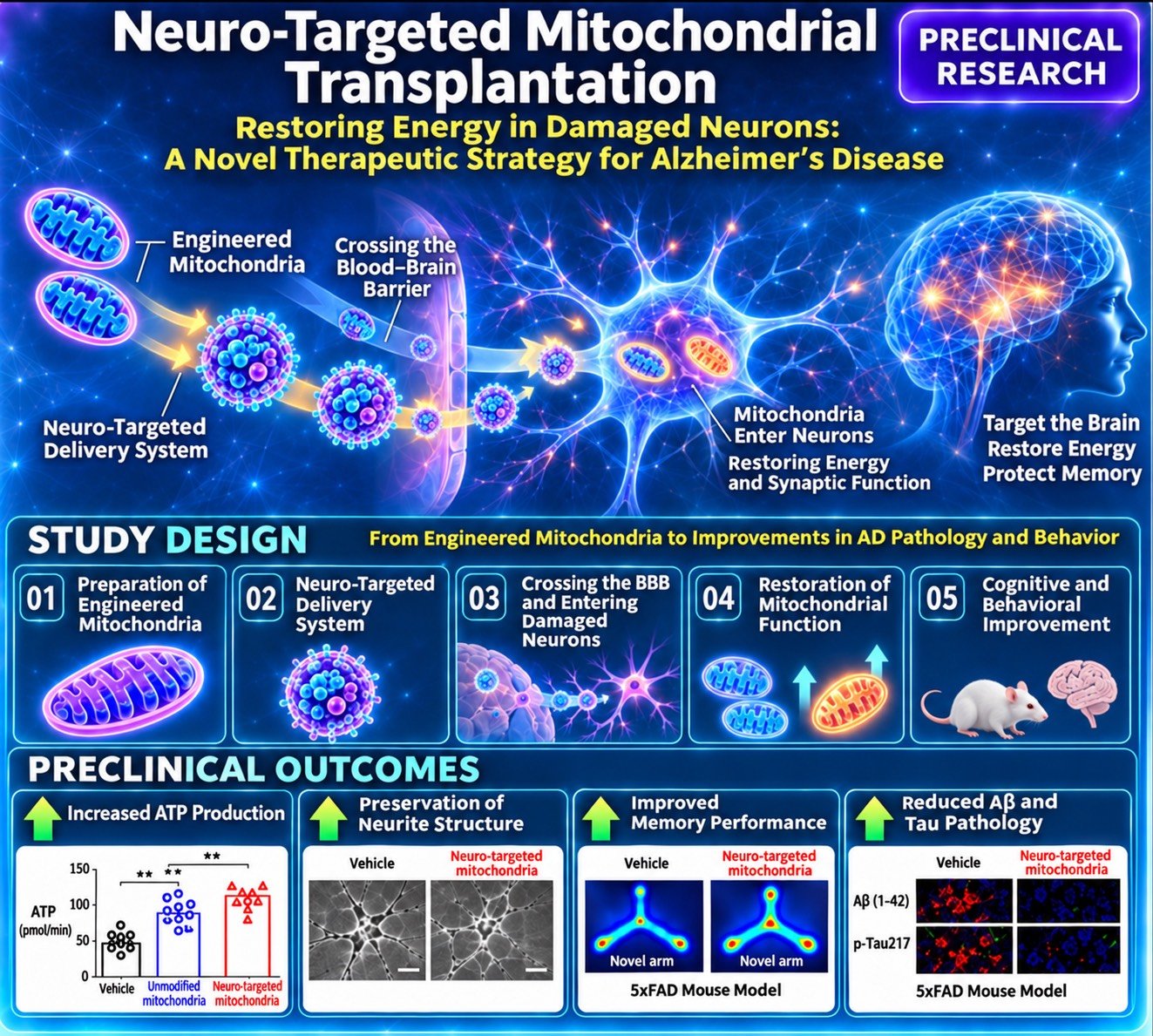
(3) Research on neural-targeted mitochondrial transplantation as an innovative therapeutic approach
We investigate neural-targeted mitochondrial transplantation to explore its potential to improve cellular energy metabolism and support neuronal function, thereby establishing a translational research foundation for precision treatment of Alzheimer’s disease.
00 Clinical Outcomes
00 Selected Research Publications
00 International Accreditations and Awards
- 2025, 2026: Best Specialized Hospitals Asia Pacific – Neurology 2026 (Newsweek).
- 2023 National Healthcare Quality Award (NHQA) Gold Award
- 2022 The Symbol of National Quality (SNQ) certification.
- 2025: Invited Speaker in Madrid, Spain
- 2026: Invited Speaker in Milan, Italy
- 2026: Invited Speaker at the Taiwan Neurological Society
- 2026: Invited Speaker in Hong Kong
00 Medical Team and Patient Access
Consultation hotline: 04-22052121, extensions 12003
Assessment for novel therapies: Eligibility requires diagnostic and biomarker confirmation, together with counseling regarding treatment efficacy, risks, and follow-up requirements.
Appointments: Book a Neurology outpatient visit through our online appointment system.
Precision Treatment of Alzheimer’s Disease and Innovative Translational Research on Targeted Exosomes, PAA Peptide, and Neural-Targeted Mitochondrial Transplantation
00 Core Expertise
We integrate cognitive assessment, biomarkers, and neuroimaging to provide precision diagnosis and treatment for early-stage dementia, including anti-amyloid therapy, while linking multidisciplinary care with innovative translational research in neurodegenerative diseases.
00 Key Features
1. Integrated care
Our center brings together specialists in neurology, psychiatry, rehabilitation medicine, family medicine, nuclear medicine, and diagnostic imaging. By integrating psychological assessment, biomarkers, and amyloid positron emission tomography (PET), we provide diagnostic services, assessment for novel therapies, and treatment monitoring.
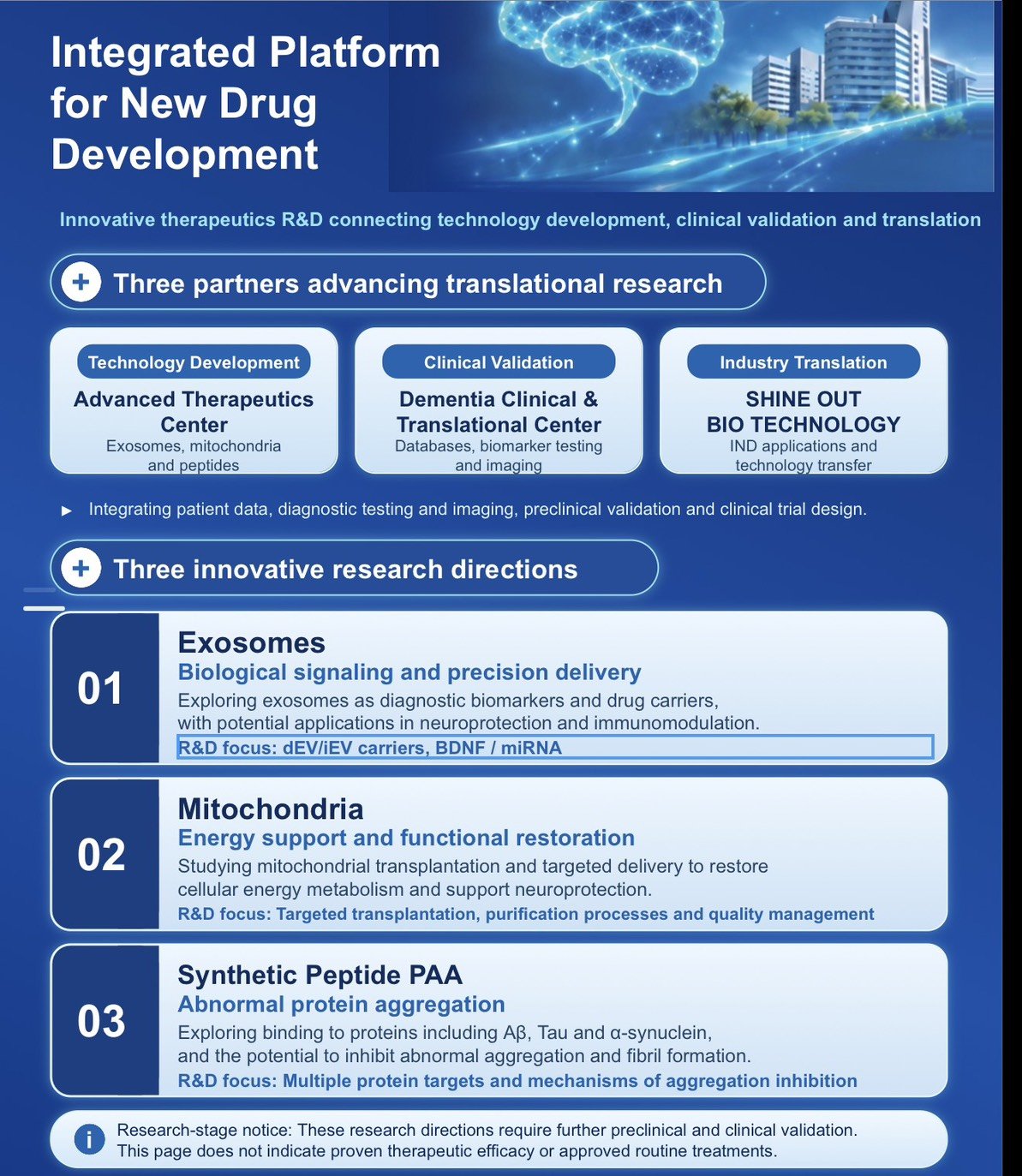
2. Collaboration with exosome and mitochondrial research teams to advance the following areas
(1) Innovative applications of specifically targeted exosomes in Alzheimer’s disease
We investigate specifically targeted exosomes as an innovative research approach, exploring their potential for precision delivery and neuroprotection to advance the development and translation of emerging therapeutic strategies for Alzheimer’s disease.
(2) Research on PAA peptide as an innovative therapeutic approach for Alzheimer’s disease
We explore the therapeutic potential of PAA peptide in Alzheimer’s disease. Through mechanistic studies and efficacy evaluation, we assess its feasibility as a novel therapeutic strategy.
(3) Research on neural-targeted mitochondrial transplantation as an innovative therapeutic approach
We investigate neural-targeted mitochondrial transplantation to explore its potential to improve cellular energy metabolism and support neuronal function, thereby establishing a translational research foundation for precision treatment of Alzheimer’s disease.
00 Clinical Outcomes
00 International Accreditations and Awards
- 2026: Best Specialized Hospitals Asia Pacific – Neurology 2026 (Newsweek).
00 Medical Team and Patient Access
Team: Interprofessional collaboration includes neurology, psychiatry, rehabilitation medicine, family medicine, nuclear medicine, radiology, psychologists, and social workers. Refer to the team profiles on the official website for the physician roster.
Appointments: Select the Dementia Clinic through the hospital’s online appointment system. Patients should bring previous examination results and medication records for specialist assessment and arrangement of any necessary investigations.
Consultation hotline: 04-22052121, extensions 17465 and 17466.
Assessment for novel therapies: Eligibility requires diagnostic and biomarker confirmation, together with counseling regarding treatment efficacy, risks, and follow-up requirements.
Appointments: Book a Neurology outpatient visit through our online appointment system.
 Facebook
 IG
 YouTube