
 Switch
 Homepage
 facebook
 IG
 Other Hospital
 CMUH App
Department of Medical Quality Department
Patient-reported outcome measures (PROMs)
Cardiology
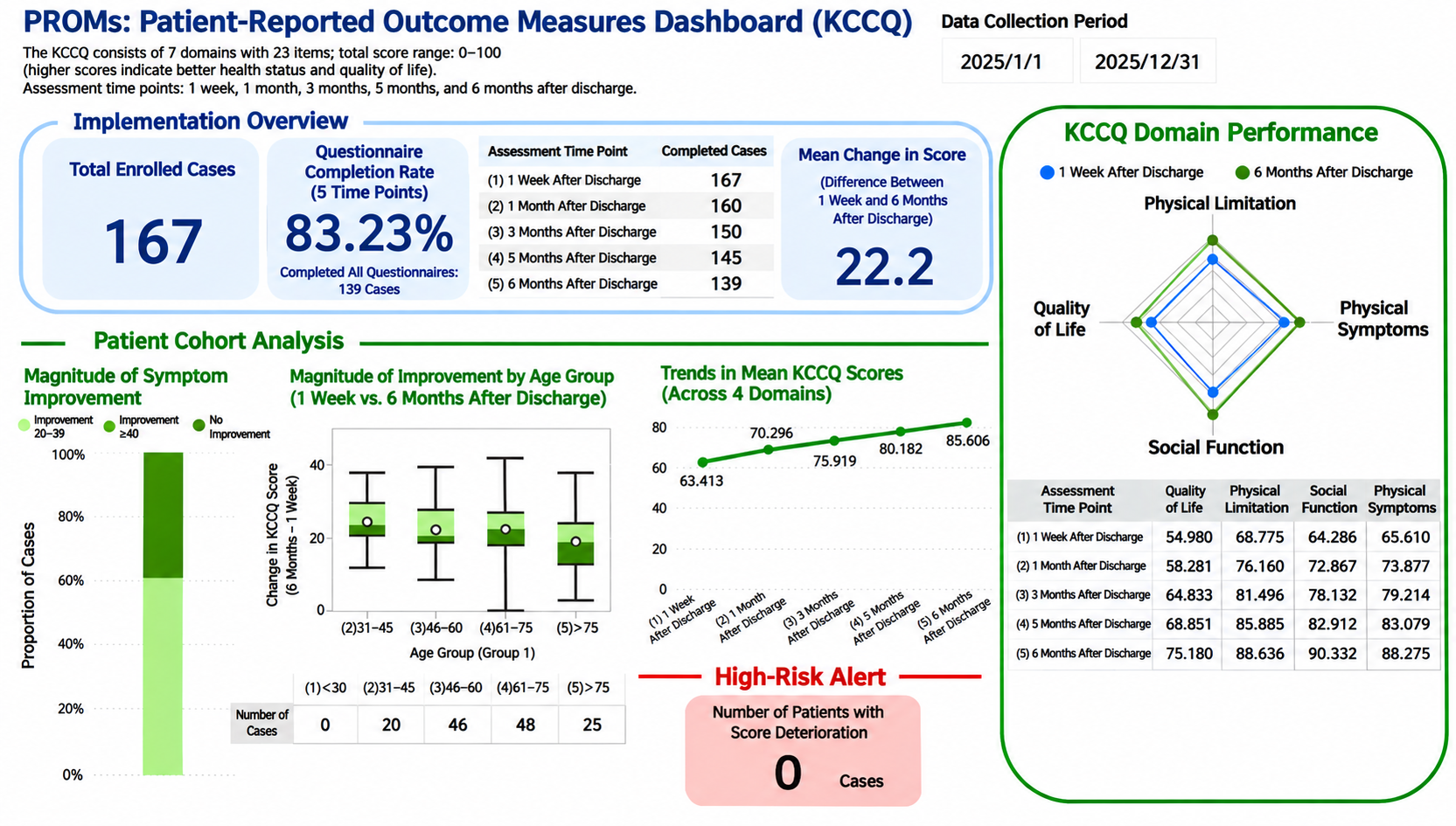
Our Power BI–based Patient-Reported Outcome Measures Dashboard integrates the validated Chinese-language KCCQ-23 into routine longitudinal heart failure care. KCCQ assessments are collected at predefined time points from first week through six months after discharge. The dashboard monitors patient enrollment, assessment completion and response rates, and displays both individual- and cohort-level trajectories in the KCCQ Overall Summary Score and relevant domain scores.
For patients assessed using the KCCQ-23, the dashboard presents seven patient-reported domains: physical limitation, symptom stability, symptom frequency, symptom burden, self-efficacy, quality of life, and social limitation. Predefined alerts flag clinically meaningful score deterioration and prompt review by the multidisciplinary heart failure team, including patient contact, clinical reassessment, and adjustment of the care plan when indicated. Patient-level results can also be discussed with patients to support shared decision-making and goal-concordant care.
Aggregated PROMs data are reviewed through the heart failure quality-management process to assess data completeness, monitor outcomes across patient groups, identify gaps in recovery, and guide continuous improvement of the heart failure care pathway. By embedding longitudinal PROMs into clinical workflows, the dashboard transforms the patient voice into actionable information for timely, personalized, and patient-centered care.
Orthopedics
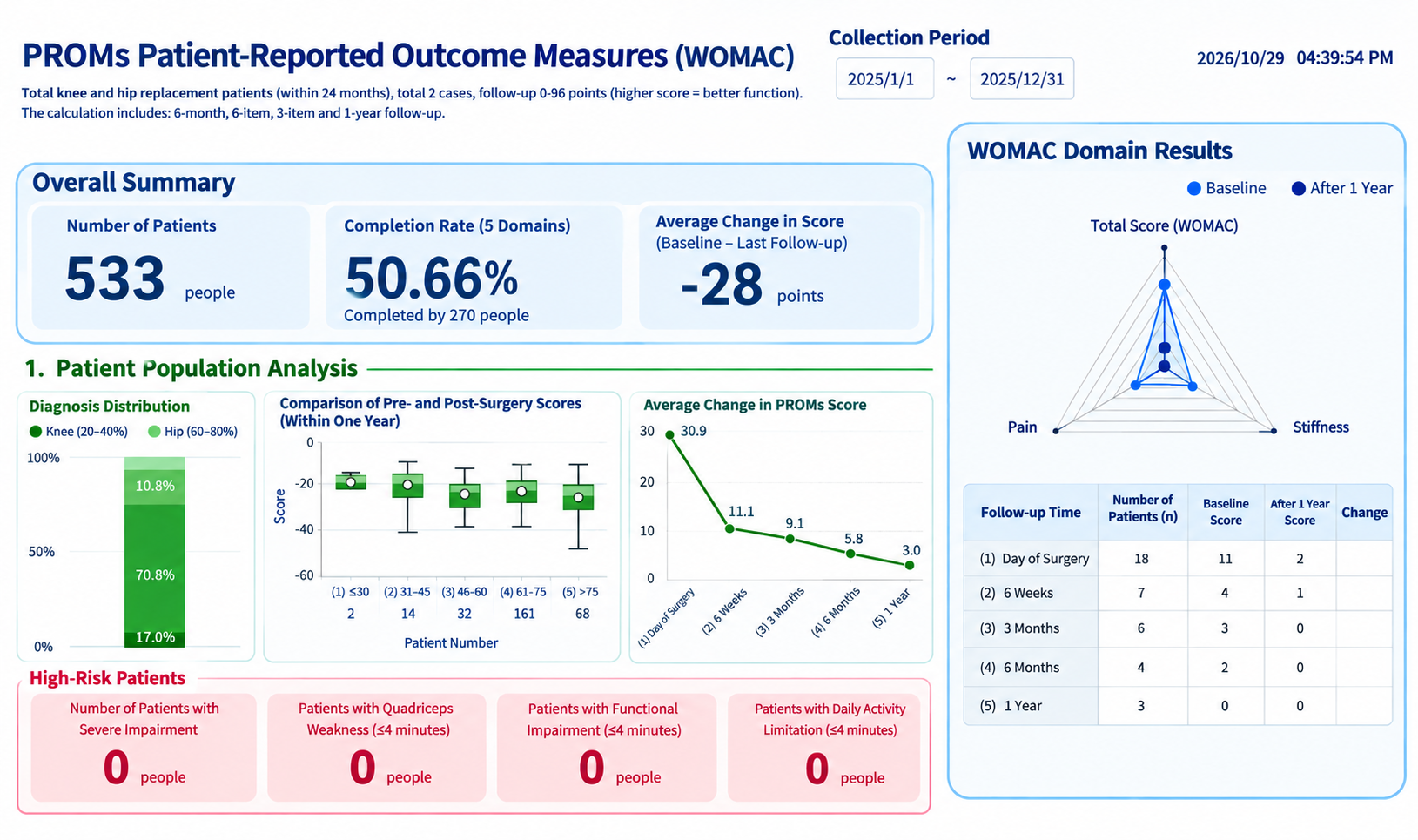
Primary Purpose Used to track patients' pain, stiffness, and difficulty with daily activities before and after surgery.
Dashboard Overview
Overall Purpose
This dashboard is designed to monitor WOMAC symptom trajectory before and after surgery, enabling rapid assessment of treatment efficacy, patient progress, and high-risk cases.
Stroke Center
Tracking Health Recovery Outcomes in Stroke Patients
Listening to Patients' Voices, Understanding Their Recovery Experiences
Successful stroke treatment is not only about saving lives, but also about helping patients regain their functional abilities and reintegrate into their families and communities after discharge.
At China Medical University Hospital (CMUH), we use the internationally recognized EQ-5D-5L health questionnaire to continuously monitor patients' health status following discharge. By incorporating patients' own perspectives and experiences, we aim to make patient-reported outcomes an essential component of healthcare quality improvement.
2025 Follow-up Outcomes
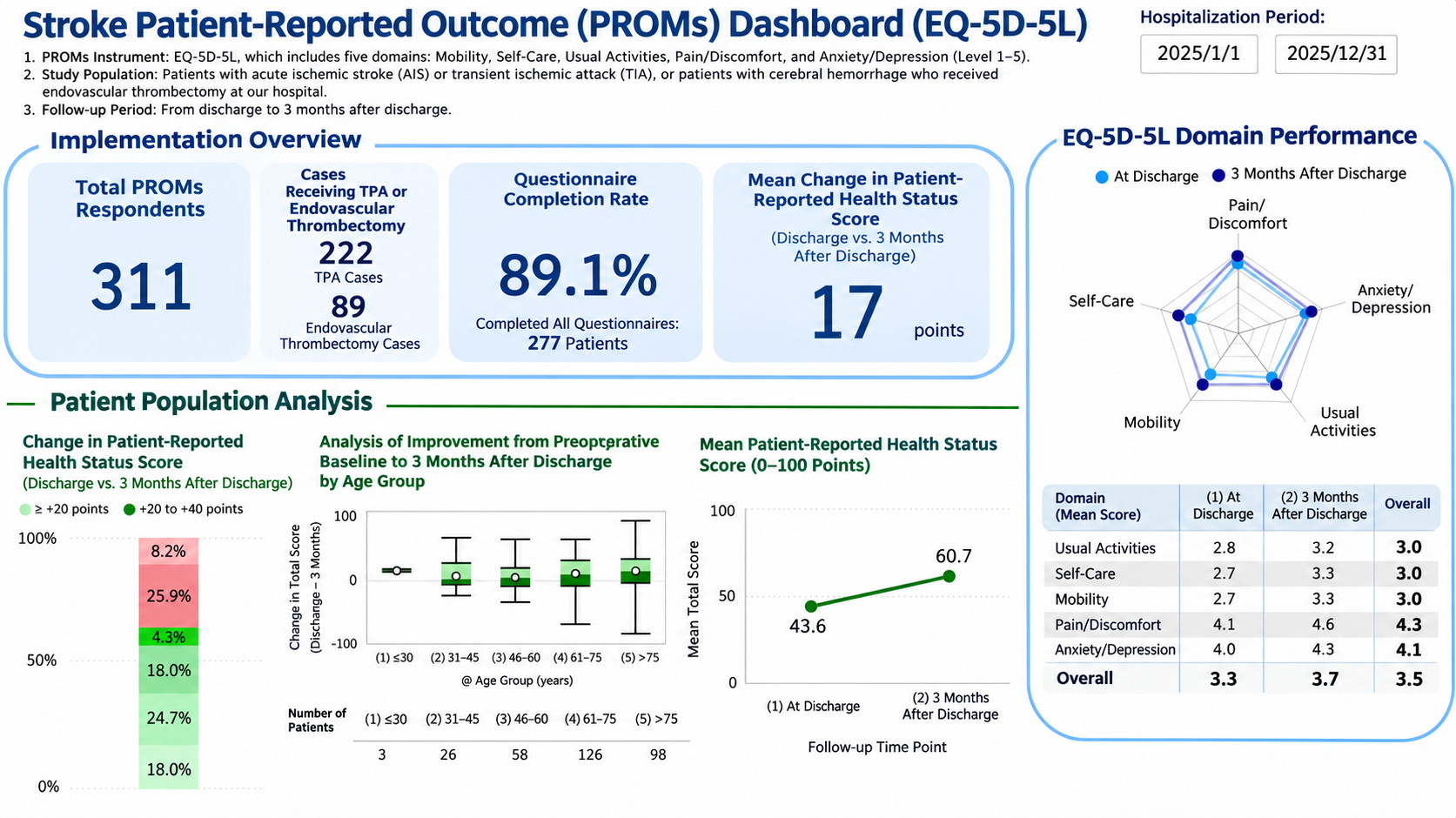
In 2025, a total of 311 patients were enrolled in follow-up monitoring, including:
-
222 patients who received intravenous thrombolysis (tPA) or endovascular thrombectomy (EVT).
-
89 patients diagnosed with subarachnoid hemorrhage (SAH).
-
277 patients completed the follow-up questionnaire, achieving an overall completion rate of 89.1%.
Significant Improvement in Patient-Reported Health Status
Patients' self-rated health status was assessed at discharge and three months after discharge. The results demonstrated:
At Discharge:43.6 points
3 Months After Discharge:60.7 points
Average Improvement:+17 points
These findings indicate that most patients experienced continued improvements in their perceived health status and gradual recovery in quality of life following acute stroke treatment and subsequent care.
More Than 70% of Patients Experienced Improved Health Status
Follow-up analysis revealed that:
-
Approximately 72% of patients reported improvements in their self-rated health scores compared with discharge, with some achieving improvements of more than 20 points.
-
Positive recovery trends were observed across different age groups.
These findings suggest that continued rehabilitation, regular follow-up visits, and ongoing health management after stroke may contribute to improved overall health and quality of life.
Patient-Centered Care: Continuously Improving Healthcare Quality
At CMUH, we continuously utilize Patient-Reported Outcome Measures (PROMs) to monitor patients' recovery experiences and health status, incorporating their perspectives into ongoing healthcare quality improvement initiatives.
Moving forward, we remain committed to enhancing stroke care services, supporting better functional recovery and quality of life, and advancing our goal of "Treating Diseases, Caring for Lives."
 Facebook
 IG
 YouTube